
Twin Falls County Sheriff’s Most Wanted List
Twin Falls County has no stand-alone sheriff's most wanted page. None exists with a stated count, photos, or a set update schedule. What the county does publish is the Sheriff's Daily Reports page, which links to the current Warrants PDF. Keep expectations realistic. That document is an operational list, not a curated lineup of the county's most dangerous fugitives. Routine or administrative entries can sit right beside the serious ones. The sheriff also warns that a warrant may have been served, withdrawn, or changed since the file was posted.
Local news plays a different part. KMVT's Most Wanted category runs selected crime stories and has drawn on sheriff-linked information and images. It is a news feed, though, not a warrant database. There is no complete count and no promise that every warrant gets covered. Which cases appear depends on what reporters choose. A name in either source is just a lead. Confirm the warrant's current status with the issuing court or agency before doing anything with it.
What a Twin Falls County Warrant Entry Shows
A dated "Warrants For Website" sample showed plain operational fields rather than photo cards. Open the live file from the sheriff's landing page each time. Older links can break as dates change.
| Field | Meaning and limit |
|---|---|
| Last and first name | The name printed by the report. A name match alone does not prove identity. |
| Charges | Charges connected to the warrant entry. |
| OCA number | An agency or case reference shown in the report. It is not automatically an iCourt case number. |
| Bond | The bond information shown for that entry, not a universal county schedule. |
| Date issued | The report’s warrant timing. Current service status needs confirmation. |
| Date of birth | An identity-disambiguation field. Handle it with care when names are similar. |
| Warrant type | An administrative category in the report, not a finding of guilt or danger. |
| Photo | No photo was observed in the reviewed warrant report. |
The warrant PDF is not a custody roster. A person can carry an unserved warrant yet sit in no jail at all. The reverse happens too. Someone gets booked without ever appearing on the warrant report. Keep the sheriff's cautions in mind during every check. Service, weekend changes, and withdrawals all happen.
How to Read the Sheriff’s Warrant Report
Read the report as what it is, a dated public record. A PDF entry can point you to the agency or court tied to a warrant. It cannot promise the warrant is still active today. And never repost a name as though the document settled anything.
- Open the current Daily Reports index and select the live Warrants link.
- Record the report date before reviewing a name, charge, OCA number, bond, or warrant type.
- Check the spelling and other identifiers, then assume a similar name requires confirmation.
- Use the Idaho iCourt portal by case or record number when one is available, or search by party with county filters.
- Ask the issuing court or agency to confirm current service status. If the person is named, contact counsel or the court rather than trying to avoid service.
The county-wide Twin Falls County booking and records path can show whether a separate arrest or release report exists. Remember, though, that a booking row and a warrant row describe different events.
Twin Falls County Crime Stoppers Tips
The Sheriff's Daily Reports page sends whereabouts tips to Twin Falls Area Crime Stoppers at 208-732-5387. Callers may stay anonymous. No reward amount is stated. Use the line to pass along what you saw. Do not argue about a charge or fish for a private status update.
Twin Falls Area Crime Stoppers
208-732-5387
Think of it as an anonymous route for information about where a person might be. No reward figure is promised.
Emergency safety
Call 911 for an emergency
Don't approach, follow, or confront anyone. Let trained responders decide what is safe.
Safety first. A name or photo in a warrant report is not an invitation to act. Send a tip and keep your distance.
Stick to what the official report actually says. A good tip names what you observed and where, nothing more.
No Verified Twin Falls Sheriff Booking App
No official Twin Falls County Sheriff app has been verified. No routine booking-photo social feed exists either. The sheriff's public channel stays the dated Daily Reports page. Idaho VINE is a separate statewide custody and court-status notification service, and it is not a county photo app.
That distinction matters. A news alert is not the sheriff's wanted list. A generic corrections app is not a booking list either. Notifications can lag behind a change, a story may spotlight one case, and a report carries only its own date. None of these channels delivers an instant photo or a complete roster.
How to Check a Twin Falls County Warrant
Twin Falls County has no interactive warrant portal. There is no dedicated warrants-unit phone line either. The practical check is a chain. Open the sheriff's current Warrant PDF first. Then search the Idaho iCourt case tool. Finally, confirm directly with the issuing court or agency. General county numbers can route a question, but calling one a verified warrant hotline would oversell it.
- Read the current Sheriff warrant report and note the date and report warning.
- Search the Idaho iCourt Odyssey portal by case or record number, or use the available party-name and county filters.
- Compare the court result with the report without assuming that a similar name is the same person.
- Contact the issuing court, clerk, or Sheriff for current service status. Use Sheriff 208-736-4040, county directory routing 208-736-4177, clerk 208-736-4004, or court information 208-736-4025 only as general routing numbers.
- If the person is the subject of the warrant, speak with an attorney or the court about lawful resolution.
Never let an old PDF drive a decision to travel, surrender, or respond. Warrants get withdrawn, served, and amended after publication. For legal advice, talk to a licensed attorney.
Warrant Types and Custody Status
A warrant type on the Sheriff's report is just a label. It flags how the paperwork was handled. Treat it as an administrative detail, nothing more. Keep a warrant check, a county booking, and a court disposition in separate mental drawers, since each one answers a different question about a case.
| Record state | What it tells you |
|---|---|
| Warrant report entry | A dated Sheriff list entry with charges, issue date, bond, OCA number, and type as shown. |
| Unserved warrant | A court or agency action may remain open, but the person may not be in county custody. |
| Arrest or booking report | A separate custody event in the Sheriff’s Arrest/Release report, if the person entered the county facility. |
| Headcount entry | Custody shown on a report date, not proof that the warrant is current. |
| Court disposition | The later case result, such as a dismissal, plea, judgment, acquittal, or pending status. |
That separation matters most when a news story names someone who has already left custody. The warrant, the booking, the release, and the court file may sit in different systems. Each record carries its own date and its own owner. So one source rarely tells the whole timeline.
When a Most Wanted Story Is News
KMVT runs a Most Wanted segment as a regular editorial feature for the Twin Falls area. Sheriff-supplied details or a booking image may appear in these stories. What the segment does not offer is a full count of everyone wanted in the county. Treat it as context and a way to route tips rather than an official roster. The date, the source, and the wording in each story deserve a close read, because news selections age faster than court records do. The capture nearby shows the news category itself, not a gallery of county records, and the image belongs to the source page. Open KMVT's Twin Falls-area Most Wanted coverage to browse the current story list.
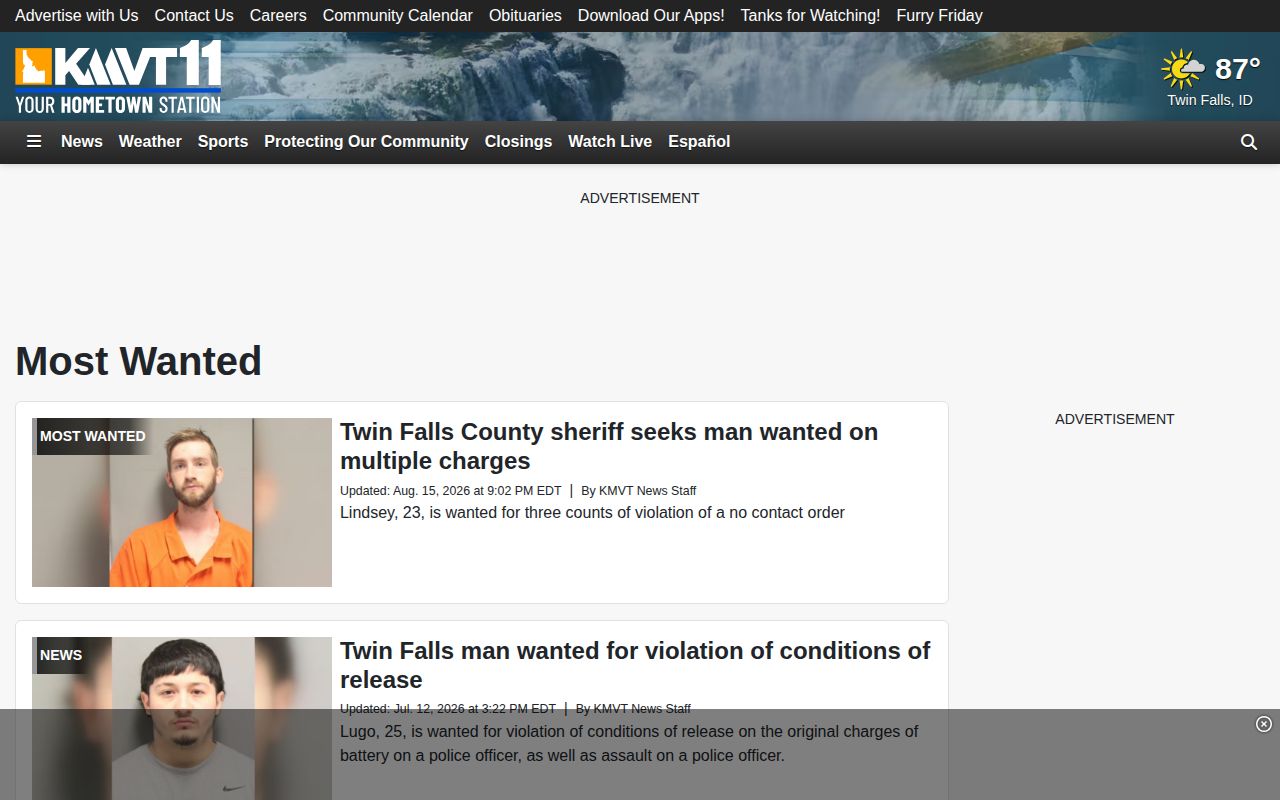
A news feature is a snapshot, not a docket. Read its dates and sourcing before drawing any conclusion from it.
Wanted Does Not Mean Convicted
A warrant listing is one step in a case, and outcomes shift. Someone named today may later face an amended charge, a dismissal, a plea, or a judgment. A release from the James R. Munn Adult Detention Facility can happen for many reasons, such as posted bond, a changed hold, or a completed sentence. None of those custody events reveals what the court ultimately did with the charge.
For current answers, use the dated Sheriff report for the operational entry, iCourt for the public case path, and the originating office for status. A photo or a warrant type predicts nothing. A record can be accurate when published yet incomplete later, and an old page should never be treated as proof that someone is wanted now. Confirm warrant status through the Sheriff, the court, or the issuing agency, and use the tip channel only for information that can be passed safely.